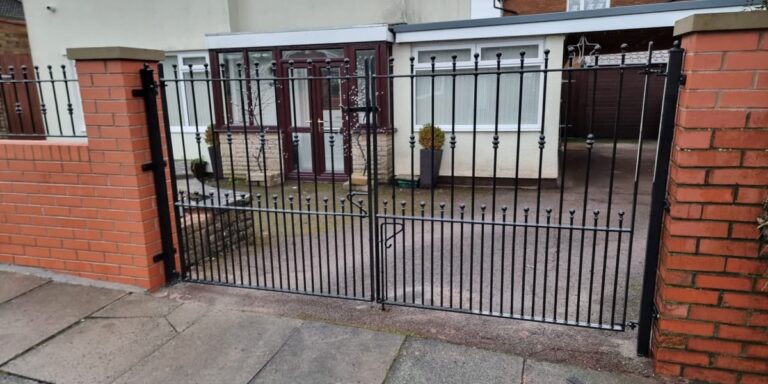
All metalwork looks great when it’s first installed. Fresh paint, a smooth finish, and clean steel can make almost any metal gate look impressive on day one. The difference in the quality of the product only becomes apparent later.
Over time, outdoor metalwork is exposed to rain, frost, moisture, dirt, temperature changes, and general wear. Without the right protection, what once looked like a valuable addition to your property can quickly start looking tired and worn.
For most people, a bespoke metal gate is not something you expect to replace a few years later. It’s an investment in the appearance, security, and functionality of your property. That’s why the finish is just as important as the design itself.
At SL Wrought Iron, all of our metalwork is custom-made to order, and for customers who want the highest level of protection, we always recommend a galvanised and powder-coated finish. While it involves additional stages during manufacturing, it creates two separate layers of protection that work together to help preserve your gates, railings, and fencing for decades.
Why the finish of your metal gate matters more than you might think
When you need new metal garden gates, it’s natural to focus on what you can see straight away. The shape of the gate, the style of the railings, the colour, the height, the decorative details, and the overall appearance all play a part in helping the finished product suit your home or business. However, the part you can’t see often determines whether that gate will continue to look and perform as it should once it’s installed.
Most people don’t invest in metalwork expecting to replace it a few years down the line. Whether it’s a set of galvanised railings at the front of your house, a decorative front gate, or a pair of made-to-measure garden gates, it’s usually something you expect to install once and enjoy for decades.
The finish of your railings or garden gate is not just the final colour applied at the end of the manufacturing process. It’s the protective system that stands between the steel and the weather. This is why two gates can look almost identical on the day they’re installed but perform very differently over time.
Why weather matters, especially here in the North
Outdoor metalwork has a hard job to do in the UK, and that is especially true in areas that experience a lot of wet, cold, and changeable weather, as we do up North. Metal gates here are regularly exposed to rain, frost, damp mornings, cold nights, and long periods when moisture sits on surfaces rather than drying quickly. Even when the weather doesn’t seem particularly extreme, it’s the repeated exposure that has an effect over time.
Steel is strong, but like most things, it’s not indestructible, and it still needs protection. When moisture and oxygen reach untreated or poorly protected steel, that’s when the problems start. At first, it might just be a small patch of rust, a tiny chip, or a little bubbling beneath the finish. Over time, though, that will spread. Paint will start to lift, rust will become more visible, and if that corrosion is allowed to continue, it will start to affect more than just appearance.
Not all metal finishes offer the same protection
One of the biggest misconceptions about metalwork is that a good-looking finish automatically means good protection. Primed, painted or powder-coated, all metal gates look great fresh out of the workshop.
These finishes all have their place too, and they can perform well when properly maintained, but that doesn’t negate the fact that they simply don’t offer the same level of long-term protection as the combination of galvanisation and powder coating.
A painted or powder-coated finish just protects the surface of the metal. If that protective layer becomes damaged through weathering, wear and tear, accidental knocks, or general use, moisture will eventually find its way to the steel beneath.
That’s why we use galvanisation. Rather than protecting the surface of the gate, galvanising protects the steel itself. It creates a layer between the steel and the elements that continues to provide protection even if the outer finish becomes damaged. And when galvanisation and powder coating are combined, you benefit from two separate protective systems working together.
This is the difference between a decorative finish and a protective system. A decorative finish helps create the colour and appearance you want. A protective system is designed to defend the steel against corrosion over the long term.
What is galvanisation?
Galvanisation is the process of coating steel with zinc. In hot-dip galvanising, the fabricated steel is fully immersed in molten zinc at around 450°C. During the process, the zinc reacts with the steel to form zinc-iron alloy layers that are metallurgically bonded to the surface. Unlike paint or other surface coatings that adhere mechanically, these alloy layers become part of the steel itself, creating a tougher and more durable protective barrier against corrosion.
Another, lesser talked about benefit of hot-dip galvanising is its coverage. Bespoke metal gates, especially the traditional designs, often include nooks and crannies, joints, edges and decorative sections that can be difficult to protect evenly with surface-only finishes. With hot-dip galvanising, the entire item is immersed, so no spot is missed.
Why galvanising has stood the test of time
Galvanising isn’t a new idea or a passing trend. The process has a history stretching back more than 200 years, and it continues to be used today because it works. You only have to look at older properties, public buildings, churches, parks and trust houses to see how long galvanised steel gates can last when they have been made and finished correctly.
This is one of the reasons we put so much emphasis on using these time-honoured techniques. If you see decorative metal gates that have lasted 50, 70, or even 100 years, it’s not luck. It’s the quality of the materials, the way the product was made, and the protection applied to the steel.
A well-made metal gate should not be treated as a short-term purchase. If it’s properly designed, fabricated, finished, and maintained, it should be something that forms part of a property for decades.
What powder coating adds
Once the galvanisation process has been completed, we then move on to the powder coating which is what adds the visible finish. This is the stage most people notice first because it gives the metalwork its final colour, texture, and appearance.
The powder coating is applied electrostatically. Unlike traditional liquid paint, which hardens as solvents evaporate, the powder is cured at high temperatures, causing the coating to melt and chemically cross-link into a dense, continuous film. This creates a uniform finish that fully encapsulates the metal surface, delivering consistent coverage and another durable protective barrier.
Why doesn’t every manufacturer offer this level of protection?
If galvanising and powder coating provide such strong protection, it’s reasonable to wonder why every manufacturer doesn’t offer both as standard. The answer typically comes down to cost, time, logistics, and the type of product being made.
A single-stage finish is quicker and cheaper to produce. Once the product has been fabricated, it can move more directly into painting or powder coating. This helps reduce handling, transport, production time, and overall cost. For manufacturers that are focused on volume, standard sizes, and lower upfront prices, it often makes more commercial sense.
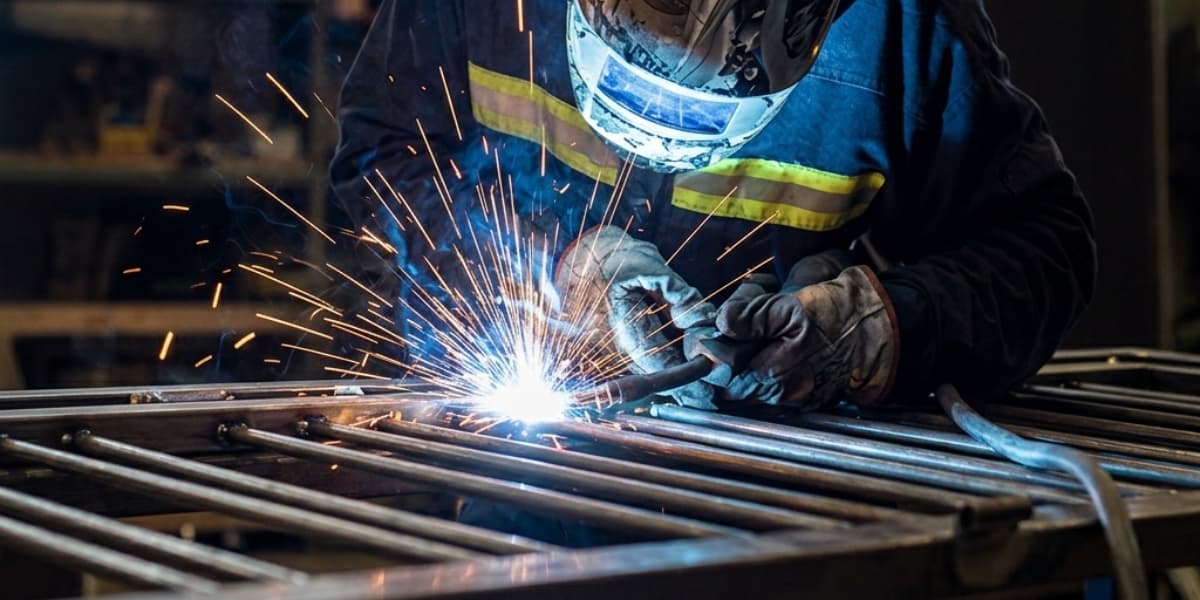
Galvanising and powder coating are more involved, specialist processes. The metalwork has to be fabricated first, then sent for hot dip galvanising, then returned for preparation, then powder coated. Each stage has to be handled correctly, and it takes time. Every product has to be moved, treated, checked, and finished with care.
Long-term value over short-term savings
Cost always factors into decisions when weighing up your options for any addition to the home. Everyone wants the reassurance that they’re getting value for money, but when it comes to metal gates, the cheapest option isn’t always the most cost-effective in the long run.
If you’re looking for something you can install and then largely forget about, it’s worth considering what you’re getting for the higher initial price. A gate that’s been properly galvanised and powder-coated won’t need repainting, won’t rust, and is built to withstand decades of exposure to the elements with little to no maintenance outside of the occasional wash down.
Our bespoke metal gates are also handmade to your exact measurements by our team of experienced craftspeople, and come backed by a 10 Year Workmanship Guarantee. When you spread the cost over the gate’s lifespan, the price difference becomes much easier to justify. In many cases, you’d need to replace several lower-cost alternatives before a metal gate of this standard reaches the end of its service life. Rather than an expense you’ll keep returning to, it’s an investment you make once and enjoy for years to come.
At SL Wrought Iron, every gate is made to order. That means we’re already focused on creating products that are tailored to your property rather than forcing you to compromise with standard sizes and specifications. The same thinking applies to our finishing process. We recommend galvanising and powder coating not simply because it looks good, but because it helps ensure your gate continues to look and perform as intended for as long as possible.
If you have any questions about our wrought iron gates, our bespoke options or any questions about our processes, just give us a call on 01254 236994 or email info@slwroughtiron.co.uk, and we will be happy to help.